An Dreoilín tin whistles, made by hand
Each whistle is shaped, tuned and finished entirely by hand — a single maker, one instrument at a time, built to sing.
Discover the whistle Get in touch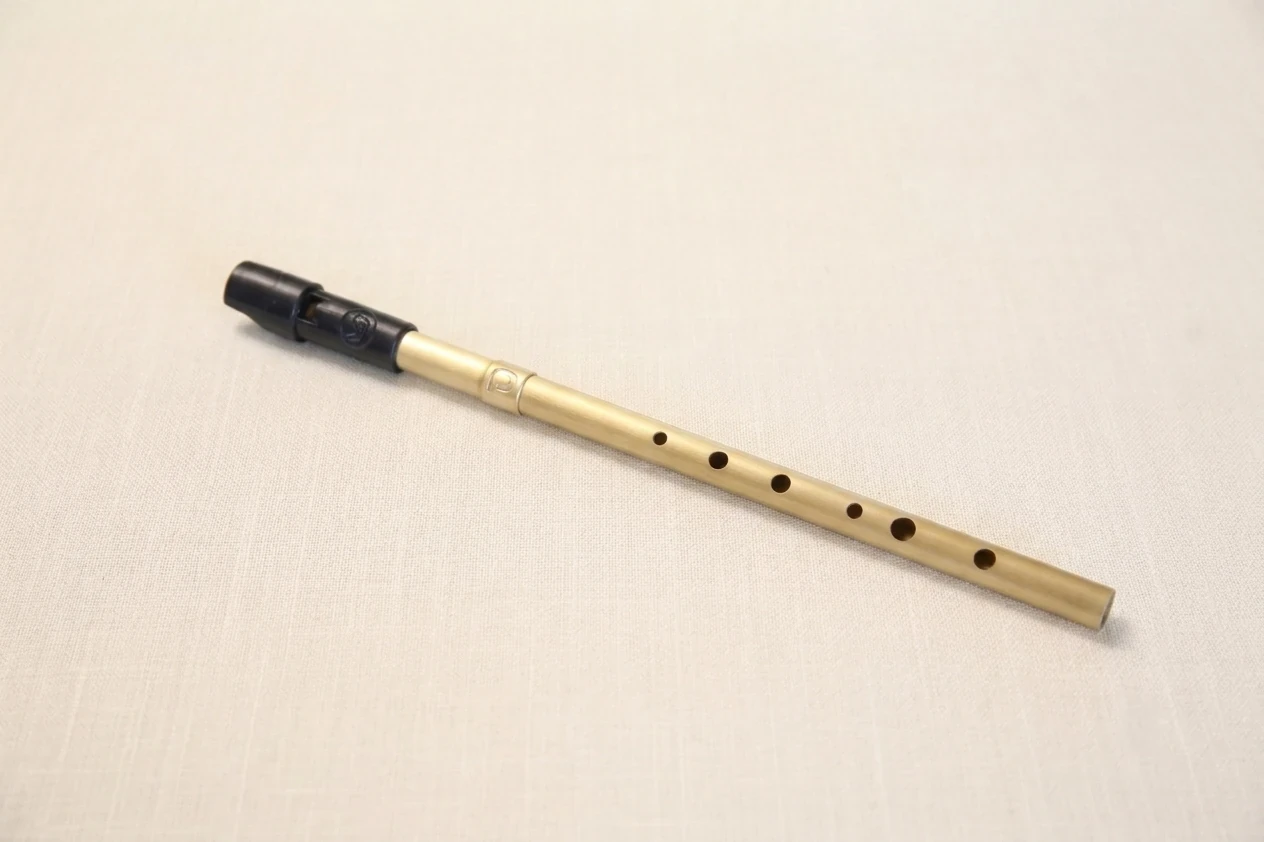
From a broken whistle
It all began with a broken whistle. Not a sudden failure, but a slow one: the head started to wobble after just six months of use, a defect I found too common for that model. Instead of applying a risky patch, I chose to learn how to design and build from scratch — first a new head, then the whole instrument. Over a year of failed prototypes, wrong whistles and handmade tools, until I reached this point.
Discover the full story →
One maker, one instrument
I'm Luca, based in Parma, Italy. An Dreoilín — the wren in Irish — is born from a long-standing passion for Irish music, craftsmanship and the search for a pure traditional whistle voice.
Every whistle leaves my hands shaped, filed, and tuned by me personally. The 3D-printed fipple head is designed with deliberate attention, and in every step I invest in the quality of the material and the precision of the finish. A brass collar around the bore is cut, shaped, engraved with the key letter D, filed, and polished as a refined final detail.
This is a young, honest project. One model, made with care, one at a time.
Built to resonate
Thin-wall brass body
The body is crafted from thin-wall brass tubing, allowing greater resonance and a brighter, more responsive sound across both octaves.
3D-printed fipple head
The fipple is the beating heart of the whistle. During the design phase I invest in detailed flow and cut research, literal design iterations and in-field prototyping. Experimentation and tuning of the duct, window, and labium are what make the tone stable and responsive from low to high register. Each head is then printed in food-compatible PETG, chosen for its durability and smooth, consistent finish.
Natural wood insert
The insert is used to gently shape and soften the whistle's timbre, contributing a warmer, rounder voice. Its natural oils also help preserve the wood and support a stable voice over time.
Hand-finished tuning
Every tone hole is positioned, drilled and refined by hand. Each whistle is played across the full range before it leaves — intonation and detail are not matters of chance.
Currently available in D major — the most common key in Irish traditional music.
The process
Everything is done entirely by hand, by me, in my workshop.
Brass tube selection
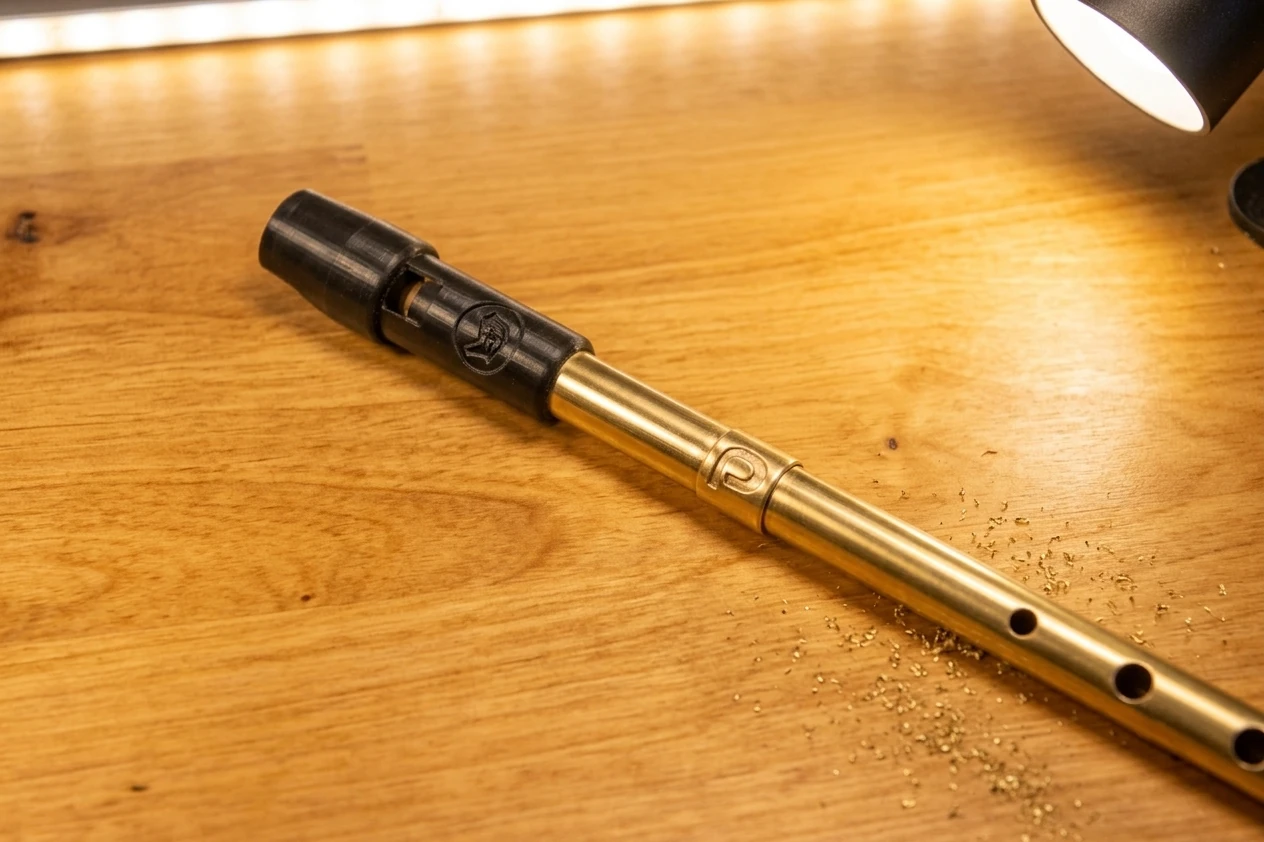
I start from thin-wall brass tubing, checking wall thickness and straightness — the raw material directly shapes how the instrument resonates.
Body preparation
The tube is cut to length, the ends dressed and deburred by hand. A brass collar around the bore is also cut, shaped, engraved with the key letter D, filed and polished before final assembly, adding a small visual signature.
Fipple head design & printing
The fipple geometry is designed in 3D CAD and printed with food-safe certified filament. Every dimension and decision are guided by my own sonic criteria and careful calibration, so quality is consistent with the handmade parts.
Wood insert fitting
The natural wood insert is shaped and hand-fitted into the fipple head. Its insertion influences the tonal character and the stability of the response over time.
Tone hole placement & tuning
Hole positions are calculated, marked, drilled and refined individually by hand, until the whistle plays in tune across both octaves.
Final finish & check
The instrument is cleaned, polished and played through its full range. Only when it passes does it leave the workshop.
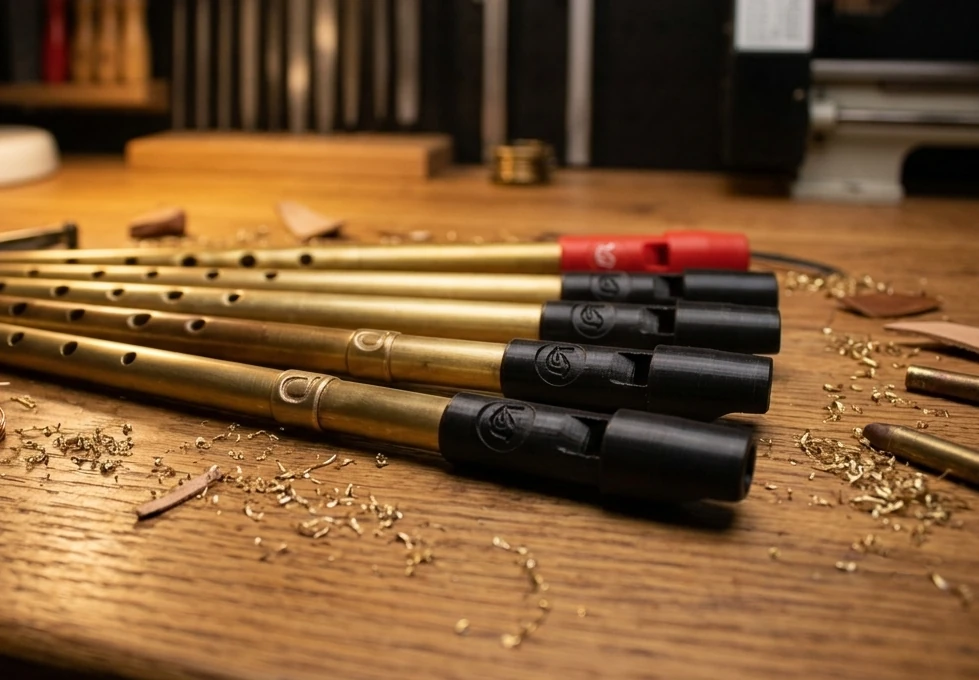
Workshop stories in photography
Explore the workshop, tools and prototypes that give each whistle its character.
Food-safe filament and responsible production
The fipple head is 3D-printed using a food-grade PETG filament that complies with EU Regulation 1935/2004 and Regulation (EU) 10/2011 for plastic materials intended for food contact. As stated in the manufacturer's Declaration of Conformity, this filament is also validated against heavy metal limits under Directive 94/62/EC and is safe for aqueous food environments. Using this certified, food-grade material reflects a broader commitment to quality and material integrity throughout the build.
What comes next
An Dreoilín is a young project, and D major is just the beginning. During development I experimented with a number of different designs and configurations — some promising enough that they may find their way into future models. Currently available in D major — the most common key in Irish traditional music — this first model is the base from which fully customizable future versions will grow.
Get in touch
Interested in a whistle, or just want to know more? Write to me — I'm happy to talk about the instrument, availability, and shipping.